
Sauna-Benefits
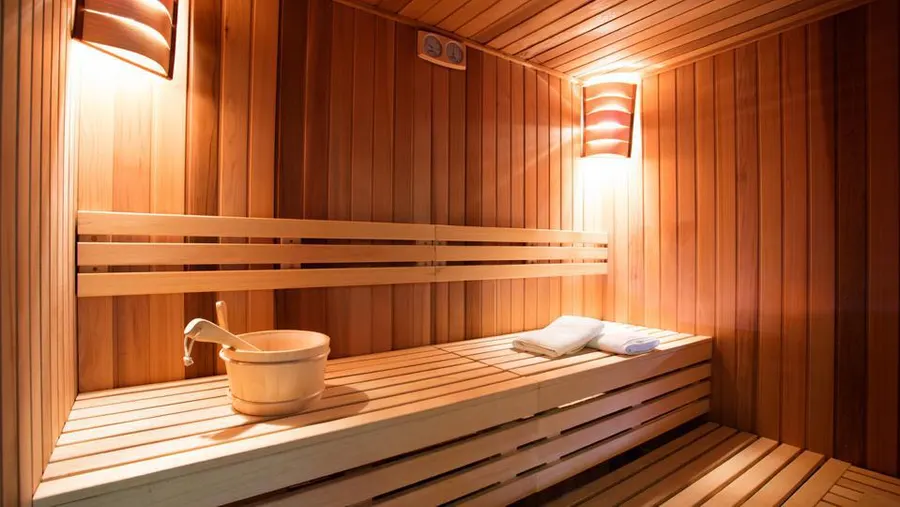
Sauna Benefits! Luxury Garden Saunas Built for People Who Want to Feel Better in 90 Days Request a private consultation If you’re investing in a sauna, you’re not buying “heat”. You’re buying a reliable way to reset your mind, recover your body, and build a wellbeing routine that actually sticks. The problem is: most sauna pages sell features and ignore what buyers really want to know, what will I feel like after 90 days. What benefits are real, and how do I choose a sauna that’s genuinely worth living with for years? Western Red Saunas build luxury garden saunas designed for consistency: the kind you’ll use regularly because they’re comfortable, beautiful, and made properly. Request a private consultation Frequent sauna use has been associated with major long-term health outcomes in large cohort studies (including brain and heart health). Alzheimer’s Society+1 In one 20-year Finnish study (2,315 men), 4–7 sauna sessions/week were linked to 66% lower dementia risk and 65% lower Alzheimer’s risk vs once/week. Alzheimer’s Society+1 In the same research programme, more frequent sauna use was associated with 63% lower sudden cardiac death risk (4–7x/week) vs once/week; 22% lower at 2–3x/week. CardioSmart+1 Sauna frequency has also been linked to 46% lower risk of developing hypertension (4–7x/week) vs once/week over ~22 years (1,621 men). TIME+1 A single sauna session has shown measurable short-term blood pressure changes in controlled studies (example: 137/82 → 130/75 mmHg after 30 minutes). TIME The “luxury” difference is not branding; it’s comfort, airflow, insulation, and materials that make regular use enjoyable. If you want the benefits, you need a sauna you’ll actually use and that’s a design and build quality question. People don’t invest in a garden sauna because they need another garden structure. They invest because they want: A clear switch-off at the end of the day Better sleep and recovery Less stress in their body and head A habit that supports long-term health A private, premium experience without gyms or spas Common advice & why it fails “Any sauna will do — heat is heat.” If heat were the only factor, people wouldn’t stop using cheaper saunas after the novelty wears off. Comfort, layout, airflow, insulation, and material quality determine whether sessions feel effortless or like a chore. “Just do 20 minutes a day and you’ll prevent dementia.” The strongest dementia evidence is associational (not proof of cause) and linked to frequency over many years: 4–7 sessions per week were associated with 66% lower dementia risk and 65% lower Alzheimer’s risk vs once/week in one large cohort. That’s powerful, but it needs to be stated accurately. Alzheimer’s Society+2Alzheimer’s Drug Discovery Foundation+2 “It’s basically a one-off purchase.” A sauna is a lifestyle product. The best results come from consistent use, which depends on whether the sauna is genuinely pleasant to use and built for long-term ownership. Request a private consultation Our method (how Western Red Saunas makes “regular use” easy) We design around one outcome: you’ll use it consistently. Our framework: Comfort-first design (space, seating, heat balance) Outdoor performance (insulation, weather resistance, longevity) Material quality (feel, aroma, durability) Simple ownership (low maintenance, easy routines) A premium experience that feels calm, not clinical Why Western Red Cedar matters (performance, not marketing) Material choice is one of the biggest differences between a sauna that feels premium for years vs one that degrades. Western Red Cedar is valued because it’s known for: Natural resistance to moisture and decay Strong insulation characteristics (comfort + efficiency) Dimensional stability (less warping/splitting) A clean, calming aroma many owners associate with the “sauna feeling” This matters because the sauna experience is sensory: the smell, heat feel, and comfort affect whether you’ll keep using it. Our method (how Western Red Saunas makes “regular use” easy) Brain health (dementia & Alzheimer’s association) In a Finnish prospective study (2,315 men, followed for ~20 years), compared with men who used a sauna once per week, men who used a sauna 4–7 times per week were: 66% less likely to receive a dementia diagnosis 65% less likely to receive an Alzheimer’s diagnosis Alzheimer’s Society+1 Important context for responsible copy: This is an association, not proof that sauna use causes prevention. Alzheimer’s Drug Discovery Foundation The findings are strongest in populations where sauna use is a long-term habit. Alzheimer’s Drug Discovery Foundation Heart outcomes (sudden cardiac death and cardiovascular mortality) A major cohort analysis published in a leading medical journal found increased sauna frequency was associated with reduced risks of: sudden cardiac death, coronary heart disease, cardiovascular disease, and all-cause mortality JAMA Network+1 A widely cited summary of the same findings reports: 22% lower sudden cardiac death risk for 2–3 sessions/week 63% lower sudden cardiac death risk for 4–7 sessions/week (vs once/week) CardioSmart+1 Blood pressure (hypertension risk over decades) In a 22-year follow-up cohort (1,621 men), sauna frequency was associated with a reduced risk of developing hypertension: 24% lower risk at 2–3 sessions/week 46% lower risk at 4–7 sessions/week (vs once/week) TIME+1 Short-term measurable changes (after a session) Controlled studies have shown blood pressure changes after a sauna session. One reported example after ~30 minutes: systolic BP 137 → 130 mmHg diastolic BP 82 → 75 mmHg TIME This supports why people often describe feeling “lighter”, calmer, and more physically relaxed after sessions, even before longer-term habits build. All-cause mortality (simple chartable numbers) A well-known medical summary of the long-term Finnish cohort reported all-cause mortality over follow-up as: 49% (once/week) 38% (2–3x/week) 31% (4–7x/week) Harvard Health The outcome timeline: how you’re likely to feel after 90 days, a year, and beyond People want outcomes, not abstract benefits. Here’s what owners typically report when sauna use becomes consistent, framed in a realistic way. After 2 weeks: the “switch-off” effect starts You leave sessions feeling calmer and mentally quieter. You notice how tense your body was before you stepped in. Sleep onset often improves simply because you’ve built an evening downshift ritual. What matters here isn’t